Una mota es una fortificación medieval situada en un cerro y rodeada de un patio y una fortificación exterior más débil. Si alguien lograba superar la exterior, los habitantes del castillo se podían refugiar en la interior y defenderse desde allí. Su nombre se emplea con frecuencia en las redes (en inglés, claro, motte-and-bailey) para denominar la técnica retórica consistente en confundir interesadamente una posición en la que todo el mundo está de acuerdo (la igualdad entre hombres y mujeres, por ejemplo) y otra que, en cambio, es terriblemente controvertida (el feminismo de género, dedicado a otorgar privilegios legales, económicos, sociales y políticos a las mujeres sobre los hombres). Cuando alguien ataca la opinión controvertida, los que la sostienen se refugian en la opinión que goza de consenso y acusan al primero de estar en su contra. Lo vemos con frecuencia. Si criticas la ley de violencia de género por fomentar las denuncias falsas y acabar con la igualdad ante la ley, entonces es que estás en contra de la igualdad entre hombres y mujeres. Es un truco sucio, fácil de identificar, pero aun así tremendamente efectivo.
También se emplea con la ciencia. Existe un acuerdo general en la bondad de la ciencia como método para avanzar en nuestro conocimiento del mundo y en nuestras habilidades para cambiarlo, pero desde hace años se está empleando ese argumento como cobertura para intentar convencernos de que la ciencia es lo que dicen que es las instituciones científicas, ya sean éstas el consenso académico o una autoridad oficial. Ciencia es, en definitiva, lo que diga el dúo calavera que forman Anthony Fauci en Estados Unidos y Fernando Simón en España, aunque la realidad se encargue de contradecirlos a los pocos días o ellos mismos admitan que mintieron por el bien común.
Las instituciones científicas nos dijeron que la deriva continental era una teoría absurda, condenaron a millones a la obesidad con sus dietas altas en carbohidratos y colaboraron en el contagio de coronavirus de miles de personas con su insistencia en que las mascarillas no servían de nada. Por eso resulta preocupante que con la presentación del último informe del IPCC se hayan vuelto a alzar voces de científicos que nos aseguran que «no hay nada más que hablar». Si se duda es que se está contra la ciencia. Es una afirmación que ataca frontalmente a la ciencia como método, pero que resulta necesaria para defender a las instituciones científicas de las dudas de quienes, empleando la ciencia, ofrecen unas conclusiones distintas o incluso se limitan a mirar el informe con ojos menos catastróficos. Son «negacionistas», como quienes afirman que el Holocausto no existió, sólo porque dudan de que unos modelos hechos con computadora sean una bola de cristal tan fiable como para sacrificar en su nombre nuestro bienestar actual y futuro. Lo estamos viendo estos días con la factura de la luz, que está donde está en buena parte porque a nuestros políticos les importa mucho menos la pobreza energética que quedar bien ante Greta Thunberg.
El informe del IPCC contiene muchas afirmaciones discutibles, como su decisión de elevar a 3 grados la sensibilidad climática cuando los 1,1 grados que ha subido la temperatura hasta ahora nos indicarían una cifra más cercana a los 1,5, o el empleo otra vez de escenarios catastrofistas imposibles que reconoce como «improbables» como vía de lograr titulares apocalípticos. También se niega a recopilar los beneficios tanto del calentamiento de la atmósfera como de las propias emisiones, entre los que está un menor número de muertes relacionadas con la temperatura (muere mucha menos gente por calor que por frío), una mayor productividad agrícola o el reverdecimiento del planeta.
Como no hablamos de ciencia, sino de ciencia oficial, lo que han vuelto a hacer políticos y periodistas con el informe es aún peor. El secretario general de la ONU ha hablado de «código rojo» y de que sólo podemos prevenir una catástrofe si actuamos ya, pero lo cierto es que se han ido cumpliendo los distintos puntos sin retorno que nos han ido marcando con los años y ahí siguen, reemplazándolos por unos nuevos cada vez menos creíbles. Y no olvidemos los medios. Que si la temperatura va a subir tanto (olvidándose de restar los 1,1 grados que ya ha subido). Que si la tierra arde. Todo con muchas fotos de incendios. La superficie quemada no ha hecho más que reducirse desde hace décadas, pero qué más da.
Vivimos en un mundo en el que la ciencia como institución nos dice que el cambio climático es indudable pero que las diferencias biológicas entre hombres y mujeres no existen. Es inevitable que, si las instituciones científicas se corrompen para servir a una u otra ideología, cada vez más gente dude de sus dictados. Entonces se defienden indignándose de que dudemos de «la ciencia». Pero eso no lo hace nadie. Simplemente, ustedes no son la ciencia.
El versículo que suelen usar los protestantes para justificar el principio de Sola Scriptura, es decir, que sólo la Biblia es inspirada por Dios y que sólo lo que hay en la Biblia es doctrina cristiana (aunque después ellos no lo apliquen en la realidad) es el siguiente :
Toda la Escritura es inspirada por Dios, y útil para enseñar, para redargüir, para corregir, para instruir en justicia, a fin de que el hombre de Dios sea perfecto, enteramente preparado para toda buena obra. (2 Timoteo 3, 16-17)
(En este escrito, todas las citas bíblicas se dan de la traducción «Reina Valera 1960», la Biblia que los protestantes en lengua española utilizan mayoritariamente y ven como la ideal. A veces esta traducción tiene lenguaje arcaico).
En esta cita no dice que la Escritura sea «lo único inspirado» o «lo único útil» para enseñar.
Es como si dijeras: «Todo el banano es útil para comer». No quiere decir que es lo único útil. También puedes comer pizza
O dijeras: «Toda la carrera de la universidad es útil para la vida profesional». No quiere decir que no haya otras cosas útiles para la vida profesional.
O dijeras: «Todas las vacunas son útiles para el coronavirus». Eso no quiere decir que sea lo único útil: las UCIs son útiles, los hospitales, etc.
Si los protestantes quisieran justificar su posición tendrían que encontrar un versículo que dijera: «Sólo lo que está en la Escritura está inspirado por Dios» o «No hay nada más que la Escritura para saber la voluntad de Dios«. No lo encontrarán: eso se lo inventó Lutero, 1500 años después
Sería útil repasar la historia de la Biblia, que los protestantes suelen ignorar porque no encaja con sus ideas preestablecidas.
Jesús no escribió una letra. Todo lo que lees en la Biblia está escrito años después de la muerte y resurrección de Jesús.
Jesús hizo lo que se hacía en su tiempo. Si quieres dar un mensaje al mundo, te rodeas de un grupo de discípulos.
Jesús no escribió una Biblia, fundó una Iglesia: la Iglesia Católica. Las Asambleas de Dios se fundaron hace 100 años. La Iglesia Católica la fundó Jesús, hace 2000 años.
Jesús dio su mensaje a sus discípulos. El lo dijo todo de voz, no escribió nada. Y le dio instrucciones a sus discípulos para que tuvieran autoridad y continuaran la iglesia.
Y yo también te digo, que tú eres Pedro, y sobre esta roca edificaré mi iglesia; y las puertas del Hades [infierno] no prevalecerán contra ella. Y a ti te daré las llaves del reino de los cielos; y todo lo que atares en la tierra será atado en los cielos; y todo lo que desatares en la tierra será desatado en los cielos.
Mateo 16, 18-19
(Aquí, Jesús usa terminología rabínica de su tiempo: «atar» y «desatar» quiere decir permitir y prohibir en sentido religioso. El «maestro de las llaves» era lo que hoy llamamos «el primer ministro»: esto se ve en el Antiguo Testamento. Jesús es el rey del reino de los cielos – esto aparece varias veces en el Nuevo Testamento – y Pedro es su primer ministro)
Lo que hacía Jesús era lo normal en su tiempo. El profeta Isaías del Antiguo Testamento no escribió una letra. El libro de Isaías lo escribieron después. Isaías hizo unos discípulos y ellos transmitieron en mensaje de palabra. Con el tiempo, esto se puso por escrito, como pasó con Jesús.
También los maestros paganos hacían lo mismo. Buda no escribió una letra: hizo discípulos. Los textos budistas se escribieron después. Sócrates no escribió una letra. Tuvo discípulos y uno de ellos (Platón) escribió lo que decía.
Entonces la idea es que los discípulos fueran evangelizando. Por eso, dice Jesús en Lucas:
El que a ustedes escucha, a mí me escucha (Lucas 10, 16)
Fíjate que Jesús no dice: «El que lee la Biblia, a mi me escucha«.
Jesús dio su mensaje a la Iglesia. A este mensaje se le llama «la tradición». Se llama «tradición» a las cosas que se pasan con palabras, de voz, sin escribirlas
San Pablo dice:
«Todo lo que han aprendido, recibido y oído de mí, todo lo que me han visto hacer, háganlo» (Filipenses 4,9).
Fíjate que no dice: «todo lo que han leído de la Biblia o de la Escritura». El mensaje se transmitía de maestro a discípulo.
También dice:
«Lo que aprendiste de mí, confirmado por muchos testigos, confíalo a hombres que merezcan confianza, capaces de instruir después a otros» (2. Timoteo 2,2).
Fíjate que no dice «lo que hayan leído en la Biblia».
Y mi preferido:
«Manténganse firmes guardando fielmente las tradiciones que les enseñamos DE PALABRA y por carta» (2 Tesalonicenses 2,15).
Entonces, Jesús dio el mensaje y la iglesia lo transmitió por palabra y por carta(de Pablo). Pero no existía la Biblia, ni los evangelios.
Los apóstoles iban de ciudad en ciudad, diciendo lo que habían visto.
Y [Jesús] les dijo: Id por todo el mundo y predicad el evangelio a toda criatura. (Marcos 16, 15)
Y el libro de los hechos de los apóstoles narra como los apóstoles iban de ciudad en ciudad predicando el evangelio («evangelio» en el griego original quiere decir «Buena Noticia», no quiere decir los libros que ahora conocemos).
Sin embargo, con el tiempo, los apóstoles se pusieron viejucos. Y los cristianos comenzaron a pensar: «Cuando se mueran estos, ya no habrá nadie que transmita el mensaje. Y se dijeron «hay que poner estas cosas por escrito para que duren para siempre».
Por ejemplo, el apóstol Pedro iba de pueblo en pueblo dando predicaciones (sermones) de lo que había visto. Y tenía un discípulo, Marcos. Y Marcos escribió lo que predicaba Pedro. Y este es el evangelio de Marcos, el primero. Pero este fue 30 o 40 años después de la muerte y resurrección de Jesús.
Papias era uno de los obispos de la iglesia, que fue discípulo de San Juan y de su discípulo Policarpo. Vivió de 69 a 150 d.C. Y él nos dice esto del evangelio de Marcos:
«Marcos, habiendo llegado a ser el intérprete de Pedro, escribió con exactitud todo cuanto recordó. No fue, sin embargo, en orden exacto que él relató los dichos y hechos de Cristo. Porque él ni oyó al Señor ni le acompañó. Pero después, como dije, él acompañó a Pedro, quien acomodaba sus instrucciones a las necesidades [de sus oyentes], pero sin intención alguna de dar una narración regular de los dichos del Señor. Por eso Marcos no cometió ningún error al escribir así algunas cosas según él las recordaba. Por una parte él ejerció especial cuidado, de no omitir cosa alguna que había oído, y de no poner en las declaraciones ninguna cosa ficticia.»
Entonces, de forma similar, se escribieron los otros libros de la Biblia. Y también otros libros que no están en la Biblia: el pastor de Hermas, las cartas de Clemente. Pero en la Biblia se incluyó parte de la tradición, parte del mensaje, no todo la tradición.
Ya el mismo evangelio de San Juan nos dice que no nos puede contar todo. Lo dice dos veces que hubo mucho más. Una vez:
«Y hay también otras muchas cosas que hizo Jesús, que si se escribieran cada una por sí, pienso que ni aun el mundo podrá contener los libros que se habrían de escribir» Juan 21:25
En otra ocasión dice:
Hizo además Jesús muchas otras señales en presencia de sus discípulos, las cuales no están escritas en este libro. Pero éstas se han escrito para que creáis que Jesús es el Cristo, el Hijo de Dios, y para que creyendo, tengáis vida en su nombre. (Juan 20, 30-31)
Los evangelios no podían recoger todo lo que había hecho y dicho Jesús. Sabían que no tenían espacio: los libros se copiaban a mano. Sólo escribieron lo mínimo para que la gente creyera.
Pero los discípulos siguieron contando a través de la tradición, cosas que no estaban en los evangelios u otros libros. La iglesia pasaba estas informaciones como siempre las había pasado: de palabra, no por escrito.
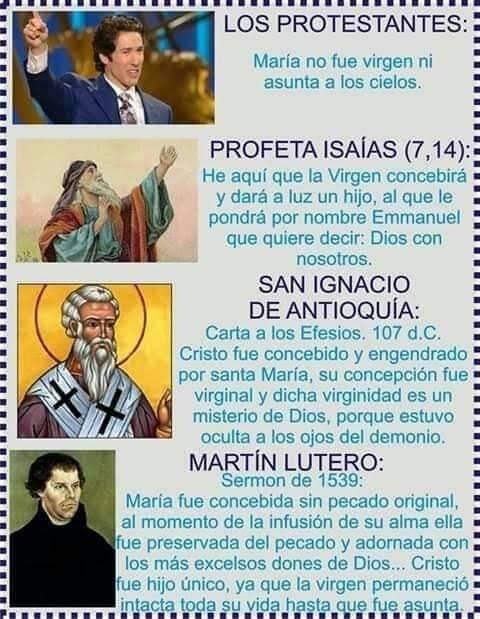
Por ejemplo, la virginidad de María
La concepción virginal de María no está en los libros que acabarían entrando en la Biblia. Pero San Ignacio de Antioquía era discípulo del apostol San Juan y recibió esa información de labios de este. Proclama esta virginidad en el año 107 d.C, sólo 60 años después de la muerte y resurrección de Jesús.
1400 años antes de que Lutero creara el protestantismo ya todos estaban claros que María era virgen. ¿Por qué? ¿Lo habían leído en la Biblia?. No, lo habían recibido de los apóstoles. Recuerda:
«Y hay también otras muchas cosas que hizo Jesús, que si se escribieran cada una por sí, pienso que ni aun el mundo podrá contener los libros que se habrían de escribir» Juan 21:25
De toda la tradición, sólo parte está en la Biblia. Otra parte está en la Iglesia. Jesús no escribió la Biblia: fundó una Iglesia.
Contaré algo más. Imagínate el tiempo de San Ignacio. 100 años después del nacimiento de Cristo. ¿Había Biblia? No.
Ya todos los libros de la Biblia estaban escritos. Pero nadie los había reunido en un único libro, como los tenemos ahora. Estaban dispersos y mezclados con otros libros religiosos.
Lo que pasa es que no existía el libro como lo conocemos. Lo que existía eran los rollos.
Entonces cada libro de la Biblia cabía en un rollo. Si había libros largos había que usar dos rollos. Por eso, hay en el Antiguo Testamento, hay 1 Crónicas y 2 Crónicas (el primer rollo del libro de Crónicas y el segundo rollo). También 1 Reyes y 2 Reyes y así.
Esos rollos se guardaban en un armario con otros rollos. Rollos de cánticos, de otros libros que no acabaron entrando en la Biblia, etc. Entonces no estaba claro qué rollos estaban inspirados por Dios y cuáles no.
Hasta que sobre el año 400 se reunieron los obispos de la Iglesia Católica y dijeron: «la lista de libros inspirados por Dios es esta». Y es ahí donde nace la Biblia.
Hubo libros que estuvieron a punto de no entrar, como el apocalipsis, el evangelio de San Juan o el libro de Esther. Había evangelios tardíos que no entraron, etc. Hubo libros que estuvieron a punto de entrar y no entraron, como el Pastor de Hermas.
Entonces, como un sacerdote dijo en un podcast: «cada vez que un protestante abre una Biblia está expresando su fe en la Iglesia Católica, porque fue la Iglesia Católica la que decidió qué libros entraban en la Biblia y cuáles no»
Ahora piensa una cosa más. Durante 400 años, los cristianos no tuvieron Biblia. Y algunos de los cristianos más ilustres estaban en ese periodo: San Pablo, San Juan, Pedro, Marcos, Lucas… Esta gente no tenía Biblia. Ni tampoco la generaciones de sus hijos, de sus nietos, de sus bisnietos. Durante 400 años, los cristianos no tuvieron Biblia
Si el cristianismo fuera seguir la Biblia, ¿quiere decir que los cristianos que vivieron durante esos 400 años no son cristianos? ¿Tiraremos a San Pablo al infierno porque no tenía Biblia?
No, lo importante es el mensaje. Esa gente recibía el mensaje. ¿De dónde? De la tradición que transmitía la Iglesia. Jesús no escribió una Biblia: fundó una Iglesia
Una cosa más. Imagínate que estamos después del año 400. Ya tenemos Biblia. Pero nadie puede conseguirla, porque los libros eran carísimos y sólo los tenían las iglesias. No es que todos pudieran tener una Biblia en su casa
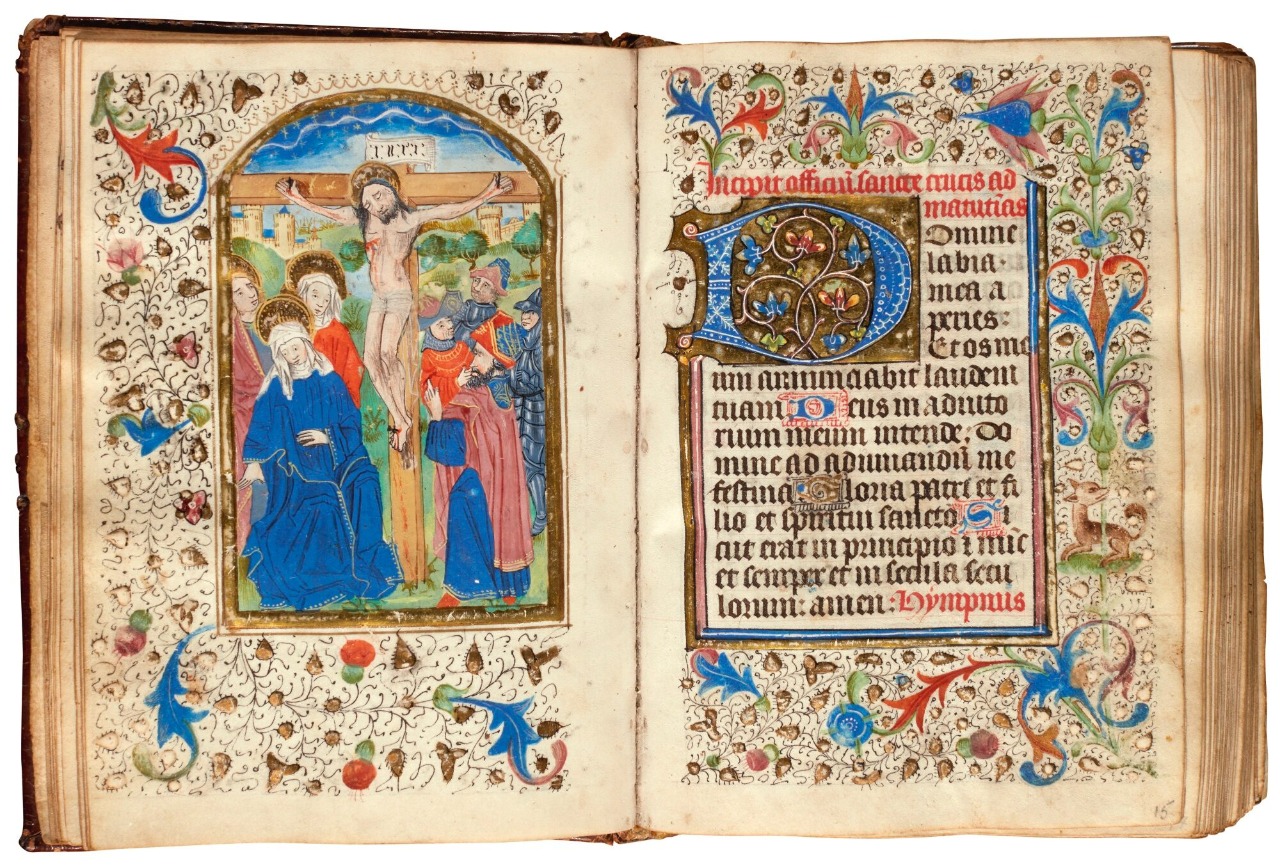
Así eran las Biblias en la Edad Media. Yo he visto unas de cerca, en el monasterio de San Millán de la Cogolla.
¿Tu te crees que un campesino podía comprar una de esas? Eran carísimas. Tenían ilustraciones detalladas. Se copiaban y pintaban a mano.
¿Como conocía la gente qué se decía en la Biblia, si no podía conseguir una Biblia? Porque se lo contaban en la Iglesia
Sólo un poco antes de Lutero, se inventa la imprenta y todo el mundo puede tener una Biblia en casa. Pero por 1400 años no fue así. ¿ Son estos cristianos en 1400 años menos cristianos porque no tenían Biblia?
No, porque el cristianismo es una iglesia, no un libro.
Los protestantes hablan como si la Biblia hubiera caído del cielo y escrita por Jesús. Y eso cuando estudias un poco, te das cuenta que es un absurdo
Yours Truly is a statistician; indeed, the Statistician to the Stars! I call myself that because I perform probability analyses for money (and only for the best people). Yet I used to call myself a physicist, because physics was what I was doing at the time. And every now and then I call myself a cook, though this term has been hotly disputed. With cause.
Besides statisticians, there are butchers, bakers, candlestick makers. There are woodworkers, snorkelers, LARPers. There are diplomats, soldiers, dowsers. Many similar names are called easily to mind, all of which describe occupations, avocations, or vocations. These labels tell of what people do.
Ed the insurance salesman who sold you your government-mandated policy is, of course, a salesman. But he was not born a salesman. Yet it is true by definition that Ed has the biological capability to sell insurance. If he did not have a certain genetic makeup mixed in time with a certain environment, Ed would never had made the actuarial grade; if, for instance, he could not reliably calculate a percentage, he would have been forced to look elsewhere for his daily bread. Even given his insurance-suited biology, and the force of a government mandate, Ed was not born or impelled to sell insurance. Selling insurance was a choice. It is true Ed may have developed a passion for policies and an appetency for annuities, but if tomorrow the government reversed course and outlawed insurance, Ed would move on and have a new occupational label affixed to him.
Now Ed is also a dad, a father. We imply from this that he is also a son and therefore a man. These nouns do not describe what Ed does, except incidentally, because everybody knows common things fathers, sons, and men do. These words instead describe what Ed is. Being as opposed to doing. Essence is essential. Ed may renounce his manhood, and may even be encouraged to do so, but this in no way changes his essence. He is and always will be a man, even if the government mandates that we call him something else. He is of essence a son because it is a logical implication of being a man that one must be (or have been) a son. Ed is only a father accidentally, with respect to being a man, because men need not become fathers and because being a father is not a requirement of being a man. But once he is a father, the office of fatherhood itself has an essential nature, the marks of which are known to all.
There are nouns that indicate essence: man, woman, son, daughter. And there are nouns indicating occupation and behavior: criminal, politician, knitter. English is not highly inflected and we do not have the grammatical declension that man differs from salesman in that one implies an essential nature and one an accident. It is an accident in the metaphysical sense that Ed is a salesman and not an assistant manager or truck driver. Ed is a man, in the metaphysical sense, essentially and unchangeably. Incidentally, in modern English essentially can also take the definition “more-or-less”, which is almost the opposite of the metaphysical understanding that essences are necessary, fixed, and definite (essences are fixed, though our knowledge of them in fluid). Watch for this.
Turns out poor Ed is an asthmatic and suffers from piles (hemorrhoids). We do not in English have a word for piles-sufferer, so let us coin pileser. Ed, then, is a pileser and asthmatic. Asthma and piles are diseases, departures from health. Because we know the essence of health in men, a departure from health logically implies that piles and asthma are accidents and not essences when describing what Ed is. Ed is accidentally a pileser; Ed is essentially a man.
We have to be careful because piles the disease has essential characteristics (which are too painful to contemplate); so, too, does asthma have a certain etiology, is associated with certain symptoms, is treated in certain ways. But these essences are of the things, the diseases, and not Ed. The absence of health, and the presence of these diseases, are accidents. They are not part of what Ed is essentially, even though, as is clear, Ed’s behavior will change in the presence of these diseases. We sometimes say things like, “Ed is not the man he used to be”, because we recognize Ed can no longer play rugby with the same verve he had before his piles and asthma, and not because we think the natures or essences of man has changed. We speak of the accidents. Or, supposing Ed’s loss of vitality the case of increasing age, we do speak of the weakening of the essence of man, because it is the nature of man to age and die. Again, English does not do a good job intimating these distinctions.
Ed is a Presbyterian, a lay member of his church. And there are within Christianity and other religions priests, nuns, monks. Here there is a distinction. In one sense, Ed is a Presbyterian accidentally, since there are other sects which he might have joined. But, accepting the premise of Jesus’s divine nature, and of Ed’s sincere faith, then Ed has also himself changed in his very essence. He has had a conversion. Therefore if any man be in Christ, he is a new creature: old things are passed away; behold, all things are become new. Ed is more than a man, he is a Christian-man. A similar but different change in Ed’s essence would have occurred were (say) Ed ordained a Catholic priest: Ed would be a priest essentially. If per impossible the premise of Jesus’s divinity is rejected, Ed would only be a Presbyterian accidentally, and Father O’Malley at St Mary’s would also only be accidentally a priest in the way Yours Truly is a statistician.
We finally come to the main point. Ed is a father and a man, but Ed is not a heterosexual; neither is he straight in any essential sense. (Recall that heterosexual and homosexual were coined only a century ago to indicate different classes of sex obsession and not essences.) Ed has with his wife procreated, but it is in the nature of man, and therefore of Ed, to procreate with wives. This is, after all, why there are so many people about. In the strict metaphysical essential sense, heterosexual-man (as we now know the word) and man are identical: the addition of the prefix does nothing to change the word or the essence. At best, the prefix could only mean recorded as acting in accord with his nature. This prefix, then, or the word as standalone, is an accidental designator.
Suppose Ed stepped on a land mine and in that accident lost his pertinents. Ed is still essentially a man, even though he has lost his ability to procreate. Just as Ed was still essentially a man even after developing piles. A departure from health does not change the essence of man, though it does change Ed. Again, if Ed were to develop a specific disease that robbed him of his sexual powers, Ed would still be a man. Ed would still be a man if he took a knife to himself and did the work of the landmine in sanitary conditions. And if Ed were to diminish his reproductive energies by misconducting himself down at the kennel (bestiality is legal in several countries) or with himself or with another man, Ed would still essentially be a man. But Ed would in each of these cases be acting against his nature.
Suppose Ed thought he could fly and tried to do so by jumping off a tall building. It is not in the nature of man to fly (sans apparatus). Why Ed thought he could fly is not important. He is, however, going to suffer from his act when Reality intersects with his Belief—he will at the least suffer a great disappointment, and at the worst suffer his final exit. Even if he didn’t suffer physically (say it was only the second floor and water was below), Ed has still acted against his nature by attempting to do something that was impossible. He will in this case suffer a crisis of thought, however minor.
This brings us to the point of asking what sexual intercourse is for. That is simple: procreation. I won’t here defend that conclusion and its ramifications, as that has been ably done elsewhere, and it is anyway obvious. That you are alive and reading this is sufficient proof: ask your parents if you are not convinced. That some can, or might be able, to monkey with the formula man + woman = child in no way changes the essence of procreation, just as a man losing his pertinents in a mishap in no way changes the essence of man. Another proof is to examine (in the West) “sex education”, the point of which is to show ways to avoid the natural consequences of sex. We did not need sex education, which is really sex diseducation; for thousands of years people without such training were already adept at the practice, until our culture decided to deny the essence of sex. Except for the dry biological details of what happens during actual sex, details which are not needed to understand the purpose of sex, sex education is of no use and to the extent it embraces anti-essentialist propaganda, causes actual harm.
Sex, then, is for procreation. What follows is that departures from the intent of procreation are departures from nature, acts against nature, unnatural acts, or perversions. It then is also true that a desire or proclivity toward these acts, even they are never committed, are also perversions of nature; they are errant thoughts.
All those supposed acts Ed committed, or fantasized about committing, not with his wife or without the intent or openness to procreation, were therefore acts against Ed’s nature. These include acts or thoughts of sodomy. This is why the Catholic Church rightly calls same-sex attraction “objectively disordered”. The catechism only errs is not going farther and labeling other non-natural attractions disordered (it didn’t think it had to, these at the time being rare). There are many such disordered acts. Masturbation, necrophilia, pedophilia, zoophilia (woofism), and so on. The lack of mention of these is, however, only because of the current and increasing popularity of sodomy. Of course, while sodomy has throughout history seen its ups and downs, it is only now that it is seen as not only natural but “good”.
What do asthmatics and pilesers have to offer mankind? Just this: they can tell us of their diseases, of the struggles and successes with them, they can describe the course or cures of their diseases; they can explain to non-sufferers their symptoms and of their suffering. A person with asthma might say, “In a way, I’m glad I have this disease. It taught me what really counts in life.” The asthmatic recognizes the departure from health, seeks to limits the excesses of the disease, and learns to live with it and to even profit from it spiritually as best he can. We would not, however, say the asthmatic or pilser has certain “gifts and qualities” because he suffers from a departure from health. Asthma or piles are never “gifts” or “qualities”, except in analogical or metaphorical senses. Nobody would seek these diseases out and wish he had them, not if he were sane. And nobody would say it is a good thing another had these maladies, again not if he were sane. We would all rather these sufferers were restored to health, even if we knew that no cure was possible.
It is true some are more prone to certain diseases than others. It is not “fair” that this is so, it is not “fair” some are stronger and some weaker. There is no sense that there can ever be “equality” in health, except for blind, anti-realistic wish. Disease strikes where it strikes. And it is even possible God wills a man to have a disease. So went Satan forth from the presence of the LORD, and smote Job with sore boils from the sole of his foot unto his crown. Job was put through great and terrible suffering, not only to teach him an important lesson, but to teach us, too. Even though, as some of us might think, he did not “deserve” it. At no point in this story are Job’s woes seen as gifts, if that word is used in any positive or happy sense. Nor were Job’s sores qualities, except in the bland sense used by a pathologist cataloging disease and causes of morbidity and mortality.
We would recognize something had gone seriously astray were the pileser to announce he was proud of his condition, if he used that word with connotations that he possessed something good or positive. To say that you were proud of having piles, a departure from health, would be the same as saying you were proud to have your abdomen slit open with a rusty tuna can, another departure from health (though you might be proud of the cause of the injury; for instance, it was received while defending the view there are no such things as homosexuals). It would be even more shocking were a man to announce he was seeking out these diseases, or any disease; it would be shocking in the same way a man announced he was seeking self-murder.
There are no piles “Pride” parades, nor asthma “Pride” parades, nor any parades in joyous celebration of what are recognized as departures from health. There are in some quarter marches to raise money and “awareness”, marches which have devolved to festive occasions, but there is no sense, say, marching for women with breast cancer is an acknowledgement that breast cancer is a good, or that women with breast cancer are more than women, something other than and superior to women. The reason we do not have these festivities is obvious to all.
Now we do in English have the word masturbator, but we do not have masturbator “pride” parades, nor do we have any notion that a masturbator is a new kind of person, different in essence than a non-masturbator. Masturbation is an act, to which some are more prone than others, and at different periods. We do not speak of the “masturbator community”. Nor do we (yet, anyway) speak of the necrophiliac community, woofie (zoophilic) community, objectum sexual community (those who simulate intercourse with common objects like fences and sofas), ecosexual community (those who simulate intercourse with piles of dirt) community, or furry (those who dress as animals and then copulate). Open pride is not necessarily lacking in each of these activities, but there are as yet no wide-spread organized efforts to win acceptance for them.
It is true, and obvious, that people act in these and other ways deviant from essential sexuality and always have. There is no sense, and no hope, that such deviations can be eliminated or prevented; indeed, there is the expectation new ways to attempt to escape from our essential nature will be invented. Who before a dozen years ago even imagined “ecosexual” behavior? Habitual population presence of certain behaviors among individuals does not make a sexual or any other act essential or good. For we have always had with us rapists, murderers, politicians, burglars, arsonists, cross-dressers. Ancient Greece had thieves, and so do we; but this does not make thievery morally right or essential to man’s nature. Ancient Greece also had those who practiced sodomy, as do we; again, this does not make it morally right. Consider, too, the affections and habits of modern practitioners differ markedly from ancient practitioners. Culture is crucial and shifting, whereas essence and right are wrong are fixed and unchangeable.
There is a dichotomy. There is sex, actual sex, that which accords with our natures oriented toward procreation, or there is simulated sex, i.e. various forms of masturbation, whether alone or with other people (this includes couplings in which contraception is used), objects, or animals, or sex not oriented toward procreation (i.e. not directed towards creating a family).
This is a key insight. Either you with your spouse are engaged in sexual intercourse, open to the possibility that the coupling will produce a new life, i.e. you are acknowledging your limited place in the world and admitting your limited understanding of how a conception may arise, even in seemingly (or actual) miraculous circumstances. Or you are “oriented” to yourself. Other terms for this are selfishness and narcissism.
Though there are many variants and encrustations to the acronym, we mainly hear of “LGBT” people or the “LGBT community”, as if lesbians and transgenders form a natural class of beings different than “breeders”; different in essence, that is. Yet because we know what sex is for, the terms homosexual or gay or lesbian and so on can only describe those persons who suffer departures from sexual health in exactly the same way that asthmatics describe those individuals who suffer departure from respiratory health. LGBT are no different in being in the condition of lack of sexual health than are necrophiliacs, woofies, masturbators and all the rest, though masturbation is a commonality. It is impossible for two men to have sexual intercourse for obvious biological reasons. Transgender individuals may not suffer a lack of sexual health, depending on their specific sexual behavior, but instead lack mental normality. A man who imagines to be a woman lacks, at the least, a full appreciation of reality. Lipstick on a pig, as the cliché truthfully teaches us, does not make the pig a woman.
The terms asthmatics, gay and all the rest, then, are analogous. None of them describe individuals who are different in essence from mankind. Gays, lesbians, and transexuals are not different in kind, just in desire and act. There are therefore no such beings as gays or lesbians or transexuals as most use the term, to implicitly describe creatures who are more (and usually better) than human. People speak of gays as if they have always been with us existing as a diaspora, and would somehow be happier if they could either transport back to their homeworld or they could transform their current abodes to resemble it. To say there are gays is like to say we have discovered a species of human-like creatures who can (secretly) fly.
If you say they are gays in the ontological sense then you must also say there are masturbators, necrophiliacs, pedophiles, woolfies, et cetera unto infinity, because it is mere prejudice and bigotry to single out any one sexual desire, like men who desire men, against all the others. That position is not supportable, though as we all know, there are currents in that direction. If there are gays, then there are statisticians, accountants, even. Indeed, there would and must be a different kind of being for every activity or desire. But if this is so, then, of course, we must toss out the biological concepts of sexual reproduction and species; they are mere baseless prejudice.
There are gays like there statisticians, though; people who act in distinctive ways. Saying this does not cast moral judgement on the acts. That moral knowledge has to come from elsewhere. And then it is unlikely we would see statistician pride parades. This joke masks the most important point. The reason we do not have pride parades of actuaries, accountants, and adders (those who have great facility with math) is because everybody knows the acts of these people are not per se immoral, whereas many do know or suspect homosexual acts are immoral. The parades are not to acknowledge the existence of that which cannot exist, but to normalize departures from sexual health as if those departures were a good or were gifts. It is because it is known the acts are shameful that open pride in them is declared.
The category error is important. Consider at least for the sake of argument that homosexual acts are immoral (as are all acts that depart from procreation). Then making the ontological error of saying there are gays must obviate the immorality. If there are gays in the ontological sense, then it cannot be that homosexual acts are immoral. Being gay is what these beings are. And everybody knows you cannot stop a thing from being what it is. You cannot eradicate essence. For if you eliminate the essence of the thing, you have eliminated the thing. It no longer exists or can exist. When you dissect a live frog, it soon becomes a non-frog. Eliminating desire for sex with another man, or preventing the act, does not eliminate the man, for an essence has not been expunged, merely a desire. You start with a man and are left with a man. But if being gay is an essence, eliminating the desire does eliminate the gay: he ceases to exist.
This is the penalty of the error of saying there are, in the ontological sense, gays. If there are, homosexual behavior cannot be immoral among gays. But then there must exist necrophiliacs, and so sex with dead bodies cannot be immoral for necrophiliacs, nor can pedophilia be wrong for pedophiles, nor can anything be wrong for the class of beings whose nature demands they act in a certain way. Yet this is clearly absurd: it is the Ontological Fallacy. Because it is a fallacy, the premise, then, must be false: there are no such things essentially as gays, transexuals, or anything but men and women.
The ontological fallacy tosses the concept of immortality onto the scrapheap, for all a person accused of an immoral act has to do is to call himself the name of those that commit the act. Any act. Saying he is this strange creature is the ultimate excuse! To make the claim that only he knows and can define his true essence, our man has to judge himself superior to nature, or to God. And we must believe him. There would be no justification for drawing any line. We would lose forever the ability to judge. We must elevate everyone’s opinion over that of God’s or Nature’s. This is self-worship. The Religion of Man says Reality must conform to Man’s will.
It is not as if we did not see this coming.
Some last words. On “hate”: The pathologist or doctor does not hate his patient for diagnosing, or in curing, his disease. If the doctor must fear his patient, or the public, because the doctor does his duty, then we are in deep kimchee. There are places on earth where the very concepts of homosexuality and masturbation do not even exist. Some people are born with congenital diseases; these births to not turn these people into essentially different beings.
To support this site using credit card or PayPal click here
Canada’s National Post, in a piece from a little more than a year ago, made a call for more statisticians to be involved in climate change research, much as the American Meteorological Society recently did. It’s relevant again, because the Post article is highlighted today on the indispensable ClimateDebateDaily.com. The…
«J’accuse! A statistician may prove anything with his nefarious methods. He may even say a negative number is positive! You cannot trust anything he says.» Sigh. Unfortunately, this oft-hurled charge is all too true. I and my fellow statisticians must bear its sad burden, knowing it is caused by our…
It is not against our nature to want to have sex with children, adults, same sex, dead things, etc. THAT IS WHERE TEMPTATION COMES FROM. If it were against our nature, we wouldn’t have people who want it. It’s the same as killing, stealing, adultery, fornication, listening to and believing lies, etc, etc. They are ALL part of our nature. God said so. If they were not, we’d still be in the Garden of Eden, where we most certainly are NOT.
Pedophilia is one step from legal at this point. A few more Islamic invaders and voila! Pedophilia is legal. I knew it would come. Thank you homosexuals for removing ALL rules to sexual deviancy. The many, many men and women (rarely women—they are for some reason allowed to bang little boys..….) who were unjustly jailed and marked for whom they loved. It’s really quite horrible what was done to them.
The “disease” in discussion only works with BIOLOGICAL diseases, not “MENTAL” illness. Mental illness is like homosexuality—you have the diagnosis PROUDLY tattooed on your forehead. I saw an “Asperger’s” lawyer the other day in the news. Only frigging idiot morons behave this way but it’s very, very common. “I AM A DEFECTIVE” is the new symbol of being an American. We love stupid, broken, ruined people with stupid labels tattood on their foreheads. We even FAKE the illness. I guess that’s our nature, too.
On the up side, and slightly off topic, I now answer any complaints about how slaves or Native Americans were treated with: “The times were changing and they should not have complained. Resistance is futile.” Hey, that’s what they tell whites and conservatives, so the good news it, whites and conservatives were 100% fair and just in what they did to Indians and slaves. After all, THE TIMES WERE CHANGING and the slaves and Native Americans should have SHUT UP AND RECOGNIZED THIS. Next time someone complains about past behavior, point this out. Whites coming to America was EXACTLY like “browns” (they are WHITE, but don’t let truth interfere) coming now. Exactly. It was 100% FAIR and JUST all along. The times were changing and objecting to any change is morally wrong—the motto of the progressives loud and clear. Make them live it.
So, my wife has had two ectopic pregnancies and thus cannot be impregnated by sexual intercourse. We have been told the surgery to repair her reproductive system is risky and very unlikely to succeed. Is it then your claim that intercourse between my wife and me, since it is physically impossible for this act to produce offspring, is sinful?
My wife has had two ectopic pregnancies and, as a result, cannot become pregnant as a result of intercourse. We’ve been told that surgery to correct this would be both risky and very unlikely to be successful in restoring her ability to become pregnant via intercourse and thus we have chosen not to attempt such surgery. Is it then your claim that our engaging in intercourse is sinful because there is no (as in no, to use a Briggsism) chance that offspring will be the result?
“…departures from the intent of procreation are departures from nature…”
IF that is accepted as factually correct then one wonders what’s going on with other animals that engage in same gender sex, masturbate , … even necrophilia!
The concluding defense statement about hate speech misses the mark — many assumptions made here are simply inconsistent with objective facts.
Actor George Takei is grateful that at the cusp of puberty, age 14, a tall, blond, handsome summer-camp counselor a few years older gave him an excellent handjob, thereby revealing his true, innate nature as a homosexual male.
If his parents ever heard of it while they were alive, they might have a different view of this, uh, seminal event.
How about a gay shame parade?
Let’s not confuse “natural” with “physical.” Many things that occur naturally may not be according to an entities nature. We must think in terms of natures, not Nature.
Nor should we confuse the purpose of a thing with the purposes of those using the thing. Or for that matter with whether injury oe impairment prevents achieving that purpose.
Mr. Briggs’ piece here is undoubtedly excellent on one level: stimulation of thought. I am persuaded by most of the piece as well. The comments offering critical perspectives from both the Christian and apparently secular or science-oriented writers, however, suggest Mr. Briggs could refine this piece to address or at least account for these inputs. I, for one, would very much appreciate Mr. Briggs’ investing the time to do that.
For example, how might Mr. Briggs reconcile his thesis with the counter examples of animals who deviate from “their nature”? With careful thought, it may be possible. It may be that Mr. Briggs’ seemingly absolute thesis could be strengthened as it is adapted in a principled manner to account for some of the commenters’ objections.
I’m going to give this some thought myself, maybe I can contribute a useful thought or two.
We can thank Briggs for another excruciatingly judgemental, article about why a sizable class of society is immoral.
Curious that such judgemental pontificating come from one sourcing their views from an authority that said, ‘judge not lest you be judged.’
That aside, gays & so forth have and always been around in society’s and no doubt always will. The core issue pertaining to that & similar classes is granting equal rights—marriage legalization is one mechanism toward that end …and state-granted marriage is distinctly different than the sacrament granted via a church authority. Treating these two as indistinguishly equivalent “marriage” is false.
As long as those types get along in in society, contribute, obey traffic & other laws, etc. why care? A free society includes the right to sin, if that’s what one believes, and do what if they’re minding their business.
The kind of intrusion Briggs advocates by imposing a particular niche view of religious doctrine is no different than what he bemoans about liberal values on campus & elsewhere. Just a different set of values — and a sort even the Christian religious don’t fully agree upon.
Also, lumping gays whose sins are consensual and do not affect members in broader society with the likes of predators like pedophile is a slanderous false grouping. Like combining those who play contact sports to & beyond drawing blood with serial rapists & killers based on a single element of similarity (drawing blood).
No such thing as Gays but comments prove existence of Idiots.
Ken is right.
1. Nobody sensible believes there are more than two sexes. Why make the false claim?
2. Christianity is not in line with your ideas on what priests are made of. God’s Holy Spirit does not do man’s biding.
3. Category errors regarding sin, immorality and criminality run through the piece.
4. Pete’s argument is just one more example of the kind of alienation and ‘collateral damage’ which such fundamentalism and sectarian dogmatism causes. It’s always emotionally driven zealots who behave like bulls in a china shop.
The Law deals with criminals. Sinners are not criminals.
Everybody is a sinner. Nobody is perfect. Nature itself produces misshapes. It sometimes seems the ones on the dogmatic side are those who can’t accept the facts of life.
“Let he who is without sin throw the first stone.”
Have you never noticed that the pope wears a dress?
I thought this was great. Thank you.
Comprehensive sex ed is comprehensive sex indoctrination.
It seems to me that humans have, so far, only human parts that are either male or female, and if used per nature in sexual reproduction result in a new human, or not if conception doesn’t occur.
Very simple.
Ken, Joy, and others who argue that immorality and criminality are distinct in a poignant way. Secular laws, which forbid certain acts and allow others, are immaterial to the inherent good or evil of the acts themselves. Nor does the privacy of an act, or it being consensual, in and of itself, determine its value. Please consider that consensual bank robbery done without innocent bystanders is no more excusable than during business hours.
But, you will say, private sins hurt no one save the perpetrator, to which I say that those who embrace sensual gratifications privately – sexual or otherwise – will lack the self control needed to be positive members of a community, as they are disposed to think of themselves above all else.
Additionally, there are degrees of both severity and culpability to what a Christian calls sin (see 1Pt 5:16-17), those that kill the soul, called mortal, and those that only maim it, called venial. But in seeking perfection, a Christian is dishonest and lacking in virtue, who dismisses one because it is less grave. To act outside of one’s nature is always a compromise that harms one’s ability to make proper discernments.
Very interesting read. I agree with the logic which you cannot escape if you are honest with yourself. I like the scripture refs. Genesis 3 tells why these types of deviant deranged acts have come about and why the potential to do the same exists in each of us due to our fallen Adamic nature. The rest of the old testament gives us thousands of historical examples of these sinful expressions by those who loved God as well as those who did not. Exodus 20 gives us God’s commandments that we are to follow and obey but due to our fallen nature we break all 10 of them on a regular basis, not just outwardly but inwardly as well. The 10th commandment is not the only one which has to do with our inward thoughts and desires. Jesus said if you lust after a woman you commit adultery and if you hate your fellow man you commit murder. The old testament also gives us all the promises of a Messiah and the new testament records the promises’ fulfillment. Rom 1:18-32 gives us a clear picture and tells us what is happening to our nation. Our moral bankruptcy is bringing us down just as it has for countless other nations over and over throughout recorded history. God is giving us up to our vial passions. History does repeat itself because of our sinful nature. As wise old Solomon wrote, “there is nothing new under the sun”! Scripture is logical too because the one who wrote it is the creator of logic! The problem is that we are blind to our fallen nature. May God have mercy on us and especially on our children. Unless we repent as a nation of people we are doomed. Thankfully the believer can have hope in the fact that God says he will never leave us or forsake us despite what is going on around us! However he never promises that he will take us out of it. True believers have been killed over the millennia as well so nothing new under the sun. Remember that Daniel’s 3 friends told Nebuchadnezzar that even if God did not spare their life they would not disobey God. However God did spare them but there are thousands of true believers who have lost their lives for their faith in God and his son. May the Lord Jesus come quickly!
The purpose of mischaracterizing homosexuality or such as essential (“born this way” etc) is to place it on a par with Race, and thus discrimination is “punishing” people not for their behavior but for the mere circumstances (fallaciously seen as irrelevant) of their birth. Race, however, is biological; if it’s still an ontological fallacy to, say, divide “white” and “black”, strictly speaking, we nonetheless have to acknowledge it is entirely different from behavioral categories. I daresay it’s “essential” in a very real sense.
There’s a progressive trope that is the other side of their counterfeit coin. They might like to make the argument we should let all the criminals loose, because they were born that way and can’t help it (Criminal Pride Parades!), or, say, the homeless. They’re stranded here, unable to avail themselves of the fallacy, so they obscure the human agency: people are not homeless, they are “impacted by homelessness”; gangbangers aren’t shooting up their streets, they’re “impacted by gun violence”, and on.
Democracy, Communism and Fascism are sons of the “Enlightenment”. This is why all of them end up in totalitarianism. It is in their DNA.
The Enlightenment is the cause: the rejection of an official religion means that “people will believe in nothing”, as you said. So people focus their lives in the material world (pleasure and money). The rejection of original sin means that men are naturally good, like Rousseau said. Since God is irrelevant and people are naturally good, it is logical to give them freedom (liberty). The only evil is in the institutions (Rousseau) and you can change these institutions by reforming the law.
Since there is no transcendent standard, every opinion is valid. This ends up in relativism and equality. Liberty and equality are entropic forces: they destroy every structure. Not only in the human realm. If all the parts of a biological cell behave the same (equality) and do what they want (liberty), the cell will end up dead. So liberty and equality are dissolving acids.
In short, the Enlightenment introduces all the concepts that rule the world today: liberty and equality. These dissolving acids destroy the personal conscience and organic communities (everything that is in the middle of the State and the citizen), because they go against “liberty” and “equality”.
So, without personal conscience and organic communities that impose social stigma, the only way to limit bad behavior is the the coercion of the State (the law enforced by the monopoly of force). So we end up with atomized individuals depending from the State, that is, from an army of bureaucrats controlled by an elite.
Communism is the fast version of this and democracy is the slow version of this. All the roads that start in the Enlightenment end in totalitarianism, by simple logic.
Whatever you think of them, the Rothschilds were the first ones to really see the potential that mass literacy offered. In 1422, what did it mean to get a loan? What did it mean to pay a tribute? Inevitably it meant carrying out chests full of heavy gold ingots, and transporting them across vast distances – a tempting target if ever there was one. Part of the reason for these massive castles is that they were needed to store all of the gold; your average peasant was physically incapable of being wealthier than what he could reasonably store and reasonably defend. It was this physical limitation which the Rothschild patriarch had the foresight to see past.
“My sons,” he said on his deathbed, “My sons, I want you to always keep faith with one another. Go out and establish a bank in each of the financial capitals of Europe – London, Vienna, Paris – and when one of your clients wishes to send money across the continent, don’t risk that money to the roads where it can be taken through banditry and taxation. Instead – send a promissory note with your seal on it to one of your siblings, and then deliver the gold to your clients account. Through this we will control the finances of the continent.”
And this is exactly what came to pass. They took the risk out of possessing great wealth by centralizing it in their well-defended banks. They adopted the boring, conservative style of modern finance rather than the pomp and ceremony of the powerful in previous eras. Ultimately they used this bloodline-based financial market to gain a better understanding of the power positions of the different monarchs, and ultimately subvert them – financing both sides of the various European wars, thus guaranteeing that no matter who lost, the Rothschilds won. Say what you will about the morality of this – a shark which stops swimming, drowns – if it hadn’t been them it would have been the Blauschilds. The advent of widespread literacy and fast transport and communication meant that power was no longer local.
That is the essence of modernity: fast, easy transport and communication, alongside impregnable, robust institutions which serve as storehouses of power.
—
“Christianity is our only real enemy since all the political and economic phenomena of the bourgeois states are only its consequences,” Rakovsky, says. (All page citations from Griffin, Fourth Reich of the Rich, 1988, p. 264)
– ‘Christian’ Rakovsky (born CHAIM Rakover in 1873) was a veteran Communist insider facing execution for plotting to overthrow Stalin.
“If my son’s did not WANT wars there would be NONE”. Gutle Schnaper Rothschild, wife of Mayer Amschel Rothschild, on her deathbed, 1849.
‘Thanks to the terrible power of our International Banks, we have forced the Christians into wars without number. Wars have a special value for Jews, since Christians massacre each other and make more room for us Jews. Wars are the Jews’ Harvest: The Jew banks grow fat on Christian wars. Over 100-million Christians have been swept off the face of the earth by wars, and the end is not yet.’ (Rabbi Reichorn, speaking at the funeral of Grand Rabbi Simeon Ben-Iudah, 1869.
“The role of the President of the United States is to support the decisions that are made by the people of Israel.” -Ann Lewis, speaking for Hillary Clinton, at the meeting for Jewish Leadership sponsored by the United Jewish Communities on March 18, 2008 (Jewess Ann Lewis is sister to Congressman Barney Frank).
En el sexto día de la Semana del Odio [..], cuando, [en el país de Oceanía] […] el odio general contra [el país de] Eurasia era ya un delirio tan exacerbado […]., en ese momento precisamente se había anunciado que Oceanía no estaba en guerra con Eurasia. Oceanía luchaba ahora contra [el país de] Asia Oriental. Eurasia era aliada. Desde luego, no se reconoció que se hubiera producido ningún engaño. Sencillamente, se hizo saber del modo más repentino y en todas partes al mismo tiempo que el enemigo no era Eurasia, sino Asia Oriental.
Winston tomaba parte en una manifestación que se celebraba en una de las plazas centrales de Londres en el momento del cambiazo. […]. En una plataforma forrada de trapos rojos, un orador del Partido Interior, […] arengaba a la multitud. La pequeña figura, retorcida de odio, […] daba zarpazos amenazadores por encima de su cabeza. […]
El discurso duraba ya unos veinte minutos cuando un mensajero subió apresuradamente a la plataforma y le entregó a aquel hombre un papelito. Él lo desenrolló y lo leyó sin dejar de hablar. Nada se alteró en su voz ni en su gesto, ni siquiera en el contenido de lo que decía. Pero, de pronto, los nombres eran diferentes. Sin necesidad de comunicárselo por palabras, una oleada de comprensión agitó a la multitud. ¡Oceanía estaba en guerra con Asia Oriental!
Pero, inmediatamente, se produjo una tremenda conmoción. Las banderas, los carteles que decoraban la plaza estaban todos equivocados. Aquellos no eran los rostros del enemigo. ¡Sabotaje! ¡Los agentes de Goldstein [el enemigo público] eran los culpables! Hubo una fenomenal algarabía mientras todos se dedicaban a arrancar carteles y a romper banderas, pisoteando luego los trozos de papel y cartón roto. Los Espías realizaron prodigios de actividad subiéndose a los tejados para cortar las bandas de tela pintada que cruzaban la calle.
Pero a los dos o tres minutos se había terminado todo. El orador, que no había soltado el micrófono, seguía vociferando y dando zarpazos al aire. Al minuto siguiente, la masa volvía a gritar su odio exactamente come antes. Sólo que el objetivo [de este odio] había cambiado. Lo que más le impresionó a Winston fue que el orador dio el cambiazo exactamente a la mitad de una frase, no sólo sin detenerse, sino sin cambiar siquiera la construcción de la frase. […]
Oceanía estaba en guerra con Asia Oriental; Oceanía había estado siempre en guerra con Asia Oriental. Una gran parte de la literatura política de aquellos cinco años quedaba anticuada, absolutamente inservible. […] Aunque nunca se daban órdenes en estos casos, se sabía que los jefes de departamento deseaban que dentro de una semana no quedara en toda Oceanía ni una sola referencia a la guerra con Eurasia ni a la alianza con Asia Oriental. El trabajo que esto suponía era aplastante.
(I don’t know why now I have logged in with another identity. I don’t mean to mislead. It is only that I am not skillful enough with Disqus)
Look, John. I know I hit a nerve. I knew I was going to do it. And yes, my comment was deliberately provocative and trying to provoke a reaction. Not because I want to p*ss people off, but because I see you as people with good intentions, the people on my side, the people on the side of good. I would like to see you winning but I think that you self-sabotage. These are strong words, I know. But please bear with me until the end of my comment. English is not my native language and I am trying to express myself.
The comment was provocative but; IMHO, it was not offensive, because saying bad things about the Founding Fathers should not be offensive to a Christian. The Founding Fathers were, in the best of cases, some good dead politicians. But the reaction I got from you is like I attacked Jesus. You got offended. You tried to defend that these people preached equality while having slaves. Nobody tried to refute that, while preaching equality, they didn’t expand the vote to everybody. Or, that they rebelled against the king of England because of taxes, and then, they suppressed ruthlessly a rebellion against them because of taxes (the Whiskey rebellion).
Even if I am 100% wrong and you are 100% right, you could say that I am mistaken. If I had said that Caesar was a ruthless killer, you would not have got offended by this or would not have labelled my statement as «offensive», because you don’t have an emotional attachment with Caesar. You would tell me that I was mistaken. We would have had a rational debate. (By the way, Caesar was ruthless in war: he killed or enslaved a third of the population of Gaul. This does not take that he had many virtues)
But touch the Founding Fathers and people get offended and you get emotional reactions, because people are emotionally attached to the Founding Fathers. This is exactly what I wanted to provoke. It was easy. It is like if I attacked Jesus. But Jesus was the Son of God and the Founding Fathers were apes, like you, like me. I see it as a form of idolatry, produced by all the indoctrination you got in school about the Founding Fathers. The goal of this indoctrination is not to help conservatives, but to see them defeated forever, to keep them inside the reservation.
Don’t get me wrong. I am not better than you. I am not more rational than you. Of course, I also have my blind spots. I don’t know what they are. Somebody else can see them but not me. The same way, you, American people have this blind spot about the Founding Fathers, which is extremely difficult for you to see.
All the things that you find evil in America are the logical consequence of the ideas of the Founding Fathers. You revere the Declaration of Independence, which is simply an anti-Christian document, a document with Freemason ideas. RedJack (above) hit the nail on the head.
Let me put an example. When the Declaration of Independence says that «all men are created equal», we can discuss what the Founding Fathers wanted to say, but the fact that this is written and revered as a quasi-religious document is the origin of many things you see as evil.
If all men are created equal and African-American people have worse economic performance than whites, this means that the cause cannot be biology. The only cause is that white people are oppressing black people. So it is fair that the government stops this oppression. So the logical conclusion is affirmative action, affirmative discrimination, reparations for black people, tearing down statues of people that tolerated this oppression, all the American past is dark because it is a history of oppression, etc.
So you deplore all these things while revering the Declaration of Independence. So you accept the premise while denying the logical conclusions. You adore the American system of government and you have been that this system has been the one that has produced the society you deplore and abhor.
For example, the separation of Church and State means that the State must have another official religion, different from Christianity. Then this official religion starts replacing Christianity, first in the laws, then in the schools, then in the people. It is logical. You deplore that America is less and less Christian while revering the separation of Church and State.
Don’t you see that the things you revere are the ones that are enslaving you? The Founding Fathers built this anti-Christian prison you are living in. Then other people implemented their ideas until their logical conclusion. Now you see that people are getting worse and worse while revering this system that is oppressing you. You are like Jews that believe in the Nazi system and revere Hitler.
Look, I don’t care that you tell me that I am an ignorant, unworthy of debate. I know I am a sh*t., because I am a Christian and I am a sinner. I am not offended by you telling me how unworthy I am, my comment being the worse of the year. Ok, fair enough. But there is something bigger than me and bigger than you and it is the truth and Christ. Even if I am a sh*t, I can say the truth. Htiler said that the sky is blue: this does not make this statement false.
I only want you to think about what I have said, instead of shutting the mind because «debate is impossible with this guy» and I touch your nerves. I know that what I say is really uncomfortable for you but I say it because I think this is the weak point by which you have been enslaved. Since America is the leader of the world, this means that everybody else is enslaved too. Even if you see me as an unworthy worm, I am on your side, on the side of Christ (and the Virgin Mary and all the saints). Not on the side of Jefferson, Washington…these guys belong to the other side. Not because America should not be independent from Britain (it should) but because the ideas they used to create the American government.
Clausewitz (el gran teórico de la guerra) dijo que el objetivo de una guerra es quitar al enemigo las ganas de luchar. Esto es imposible con Afganistán con la forma de guerra actual. Esa gente vive para la guerra. Si los conquistas, van a educar a sus hijos y nietos para que guerreen contra ti. Algún día te tendrás que ir y entonces perderás todo lo ganado. Esto ya lo decíamos mucha gente desde hace más de diez años y la realidad nos ha dado la razón.
¿Se puede conquistar Afganistán? ¿Se puede hacer que los afganos pierdan las ganas de luchar? Sí, pero con técnicas mucho más crueles que las que ahora estamos dispuestos a aceptar. Tamerlán lo conquistó con una crueldad increíble. Mataba a todos los pueblos (con niños y mujeres) que sospechaba que se habían rebelado contra él. Los campesinos llegaban a él con hierba en su boca, para dar el mensaje de «Soy tu vaca». El los mataba igual.
Otra opción sería quedarse doscientos años de potencia colonial, desactivando el tribalismo y el islam con técnicas salvajes (no las técnicas que los colonizadores franceses e ingleses impusieron en Africa y Oriente Medio, que demostraron ser demasiado suaves). Aún así, no está seguro de que se gane.
Con una situación así, lo mejor es no involucrarse en esa guerra y los rusos le advirtieron a Estados Unidos que no lo hicieran. Los dos imperios (soviético y americano) pecaron de arrogancia.
Además, desde el punto de vista ético, si los afganos quieren vivir así, no tenemos derecho a imponerles nuestro modo de vida y a quien no le guste vivir así, siempre puede emigrar a Occidente. Esto es ajeno al modo de pensar occidental, que pensamos que todo el mundo debe ser como nosotros y envíamos jóvenes nuestros a morir para que los afganos tengan una democracia que no desean o para que las afganas pongan un condón en un plátano en la escuela. A base de bombas, queremos imponerles nuestros valores.
Dicho esto, tampoco ellos tienen derecho a imponernos sus valores. Para gente con valores tan diferentes, se han hecho los países. Cada pueblo vive en su propia nación, con una ley que refleja sus valores. Los que no están de acuerdo, pueden emigrar a otros países.
La política de Occidente es «invade a otros pueblos, invita a otros pueblos». Las dos partes están equivocadas. No tenemos derecho a invadir a otros pueblos e imponerles nuestros valores.
Tampoco tenemos derecho a invitar a otros pueblos con valores diferentes a los nuestros, pues la ley sólo puede reflejar unos valores que ahora son los nuestros pero mañana pueden ser los de ellos (pues se reproducen más). Esto es una receta para el conflicto a medio plazo y el suicidio a largo plazo.
Eres muy ingenuo. Por supuesto, que el resto sí que les obliga a ellos a no serlo. En un país sólo puede haber una ley y esta no es neutral: responde a algunos valores. Los que no comulgan con esos valores, están obligados.
Pongamos un ejemplo. Supongamos que USA gana la guerra en Afganistán y pone un gobierno títere, que intenta implantar los valores americanos: democracia, igualdad, etc.
En las escuelas se enseñará, por ejemplo, educación sexual a las hijas de los talibanes. Así, la escuela obligará a las familias de los talibanes a no serlo. Las leyes darán la misma igualdad a hombres y mujeres, lo que está contra el estilo de vida talibán. También formarán una democracia de ciudadanos iguales, lo que está en contra de la forma de gobierno tribal de los talibanes, por no decir de la sharía, etc.
Por supuesto, ahora tú te estás rasgando las vestiduras. Por supuesto, que la ley debe imponer eso: es justicia básica. Bien, para los talibanes, la ley islámica es justicia básica. Sin saberlo, tú eres un talibán de la democracia, los derechos, la igualdad, etc. Eres tan fanático como los talibanes: sólo tienes una religión diferente.
Pero los talibanes te superan en algo: ellos saben que tienen una religión y que son parciales. Tú eres igual de parcial y también tienes tu «religión», pero te crees que eres neutral. Los talibanes son fanáticos pero conscientes de serlo. Tú eres fanático pero no eres consciente de serlo.
Un país sólo puede tener una ley y la ley está basada en unos valores. La ley prohíbe lo que considera malo y autoriza lo que considera bueno, según su escala de valores. La ley impone estos valores sobre la sociedad. Esto es verdad en la España actual, en la Unión Soviética, en Arabia Saudita y en todo régimen político. Lo único que varía son los valores impuestos.
Quine tiene los mismos valores que la ley impone se siente en libertad y, de hecho, cree que la ley es neutral. Son los que no comulgan con él, los que ven la imposición.
La autodeterminación de género, facilitada por la nueva ley del Gobierno, abre un abanico de posibilidades. Quede claro que, desde aquí se estará siempre a favor de que cada persona se identifique con la identidad que quiera tener, o con las identidades que vaya teniendo. Nada en contra, por tanto, de la autodeterminación de la identidad por parte del individuo, posibilidad que, en principio, está al alcance de cualquiera en un país libre. La cuestión que plantea la ley, sin embargo, es otra. De lo que se trata, si hacemos abstracción del caso que regula, es de que la identidad que uno reconoce como suya, frente a otra que se le asignó oficialmente, obtenga el sello de reconocimiento del Estado. La ley posibilita resolver esa incongruencia en relación al género, pero ¿por qué dejarlo ahí?
Por qué dejarlo ahí cuando puede haber – y hay – más incongruencias entre la identidad oficial y la que uno siente como propia. Máxime si esa falta de coincidencia provoca sufrimiento o reduce las oportunidades o favorece, por ejemplo, la discriminación. Naturalmente, no son comparables el sufrimiento y la discriminación de los trans con los de otras personas que perciben disparidad entre su identidad sentida y su identidad oficial. Cada sufrimiento es un mundo. Pero de una ley que permite cambiar del sexo asignado al nacer con una declaración ante un funcionario se desprende un principio importante: la plasmación oficial dela identidad no debe estar determinada por ciertos hechos biológicos. Siendo así, tampoco debería estar determinada por un hecho biológico como la edad. Habría que dejarla al libre albedrío.
Pongamos la vida real. Muchas personas, al llegar a una edad, se encuentran con que no pueden encontrar empleo, debido a su edad, precisamente. Se sienten en plena forma, tienen experiencia y todo lo demás, pero a la vista de su fecha de nacimiento, nada, que no los quieren. O, al revés, aunque esto es mucho menos frecuente. Y qué decir de los estereotipos asociados a la edad: por qué hay que soportarlos, padecerlos o amoldarse a ellos. Ya que lo fundamental es sentirse, si uno siente que su identidad en términos de edad no es la que corresponde a su edad oficial, ¿por qué no arreglar esa incongruencia? Circula un nuevo y horrendo término, edadismo, para referirse a la discriminación por razón de edad, que indudablemente existe. Cierto que no va a desaparecer así como así, pero un avance, y fácil, sería eliminar la fecha de nacimiento del DNI. O el propio DNI, ya puestos.
Thank you for watching
Hace un par de años, un ciudadano holandés, Emile Ratelband, presentó una demanda para cambiar su edad de 69 a 49 años. Se sentía discriminado, y tanto a la hora de encontrar empleo como de comprar una casa o de buscar pareja. «Vivimos en una época en la que puedes cambiar de nombre y cambiar de género. ¿Por qué no puedo decidir yo mi propia edad?», alegó. Estaba dispuesto a renunciar a su pensión de jubilación con tal de que su edad oficial concordara con la que él sentía que tenía, pero no lo consiguió. El tribunal reconoció que la edad es parte de la identidad de una persona -un primer paso-, pero concluyó que el cambio de edad provocaría demasiadas complicaciones. ¿Y el cambio de nombre o de género, no? Además, qué importan las complicaciones cuando se trata de la autodeterminación de la identidad. Luchemos por el reconocimiento oficial de la identidad autodeterminada. En todo y para todos.



Clear. Precise. Brilliant.
Thank you